Euclid Releases First Major Catalog (DR1) Covering Over 1 Billion Cosmic Objects
The November 2026 data release spans more than 900 million galaxies and 60 million candidate quasars across an area equal to 9,500 full moons.
In November 2026, the European Space Agency released Euclid's first major science catalog (DR1), capturing over 1 billion celestial objects—including more than 900 million galaxies and 60 million potential quasars—across a sky area equal to 9,500 full moons.
- Over 1 billion astronomical objects released in Data Release 1 (November 2026).
- Includes 900 million+ galaxies and roughly 60 million candidate quasars.
- Covers an area equivalent to ~9,500 full moons as the foundation of its 3D dark-universe map.
Euclid Data Release 1 (DR1) Catalog Breakdown (Nov 2026)
Cataloged objects in millions
Source: ESA Euclid Consortium (DR1, November 2026) · Area equal to ~9,500 full moons.
What Euclid Data Release 1 (DR1) actually contains
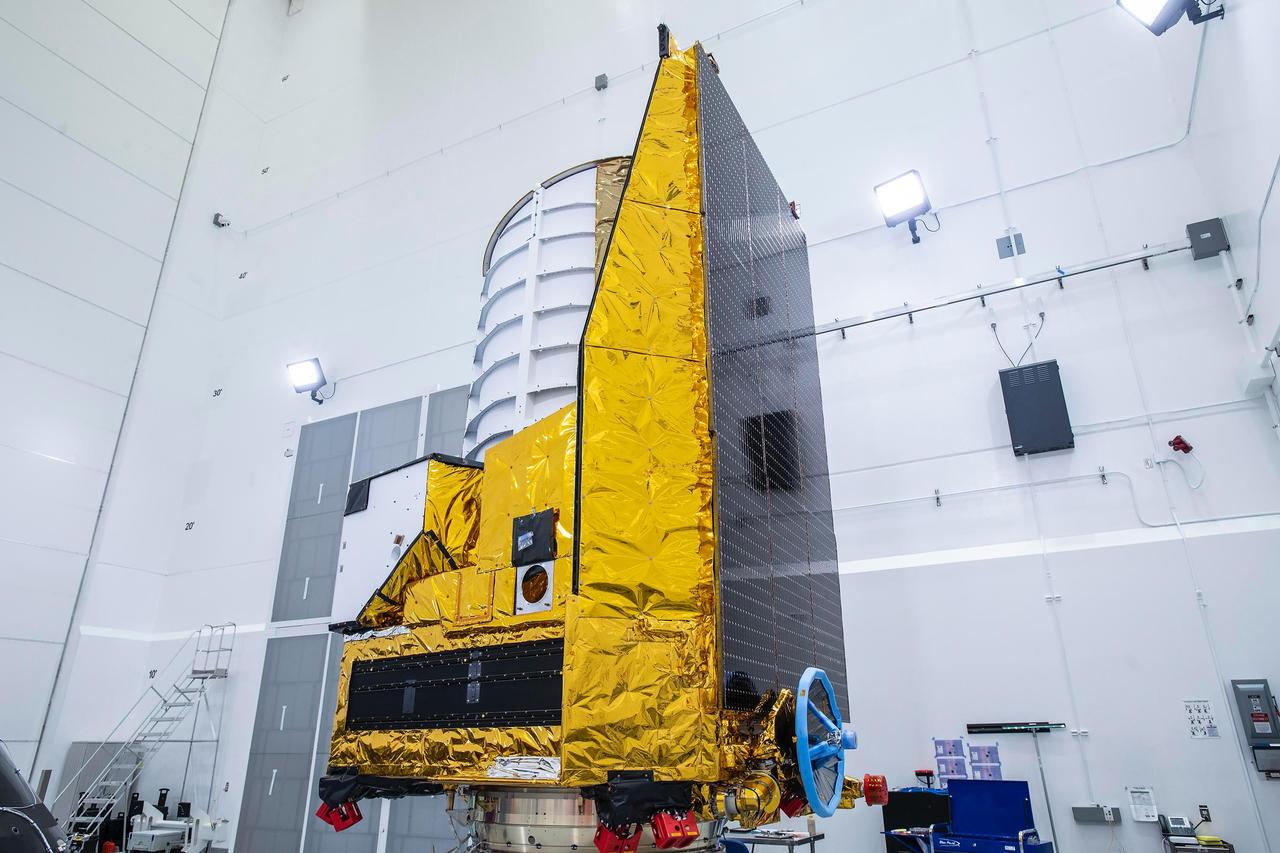
Operating from Sun–Earth Lagrange point L2 (1.5 million km away), Euclid pairs an ultra-wide optical imager (VIS) with a near-infrared spectrometer and photometer (NISP). Its November 2026 Data Release 1 opens the first massive calibrated dataset to the global astronomy community.
In raw numbers, DR1 catalogs more than 1 billion cosmic sources: over 900 million distant galaxies and roughly 60 million candidate quasars—bright galactic cores powered by actively feeding supermassive black holes.
Survey scale: from 9,500 full moons to one-third of the sky
As illustrated in the DR1 breakdown chart, galaxies make up the overwhelming share of the catalog, providing dense shape measurements needed to detect subtle weak gravitational lensing distortions.
While 9,500 full moons already represent an unprecedented wide-field space survey at sharp resolution, DR1 is only the opening chapter of Euclid's 6-year mission to map 15,000 square degrees—one-third of the entire sky—out to 10 billion light-years.
Why this matters for dark matter and dark energy
By tracing the 3D clustering of hundreds of millions of galaxies and measuring how unseen mass slightly bends their light, cosmologists can map dark matter filaments and test whether dark energy's accelerating push has stayed constant across cosmic history.
Frequently asked questions
How does Euclid differ from the James Webb Space Telescope?+
James Webb zooms deeply into tiny patches of sky with extreme infrared sensitivity, whereas Euclid acts as a space wide-angle survey camera capturing millions of galaxies at once.
Is Euclid DR1 publicly accessible to scientists worldwide?+
Yes. Under ESA's open-science policy, calibrated DR1 catalogs and science products are distributed publicly via the ESA Science Archive.
Verification Fact Sheet
Original source: European Space Agency (ESA Euclid Consortium — DR1)
Evidence: Calibrated VIS optical + NISP near-infrared survey catalogs from L2.
Scope: Over 1 billion cosmic objects (900M+ galaxies, ~60M candidate quasars).
Announced date: Nov 2026